
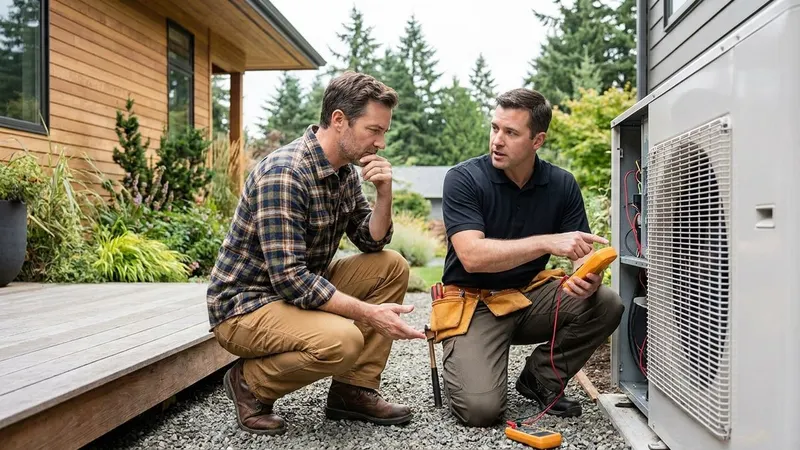
Choosing the right HVAC service provider can make a world of difference in keeping your home comfortable year-round. Not all service providers are created equal, so make sure to look for a company with experienced technicians, proper licensing, and insurance, and a solid track record of customer satisfaction. These are the cornerstones of quality HVAC service.
When I’m evaluating an HVAC company, I always check their qualifications and read customer reviews. A good provider should offer comprehensive services, from regular maintenance to emergency repairs. They should also be able to explain things clearly without using confusing jargon. After all, your comfort is on the line, and you deserve a provider who can keep your system running smoothly.
Key Takeaways
- Choose a provider with experience, proper credentials, and positive customer feedback
- Look for comprehensive services including maintenance, repairs, and emergency support
- Prioritize clear communication and a commitment to your home’s comfort
Identifying Your HVAC Needs
Before you choose an HVAC service provider, you need to know what you’re looking for. Let’s break down the key areas to consider for your home’s comfort and efficiency.
Assessing Your Home’s Heating and Cooling System
Start by taking a good look at your current setup. How old is it? Is it keeping up with your comfort needs? Are some rooms too hot or too cold?
If your system is more than 10-15 years old, it might be time for an upgrade. I’ve been in homes where the AC was older than the homeowner! Look for signs of wear and tear, like strange noises or frequent breakdowns. These are red flags that scream “replace me!”
Don’t forget about your ductwork. Leaky ducts can waste up to 30% of your conditioned air. That’s like throwing money out the window!
Considering Energy-Efficient Options
Energy-efficient HVAC systems might cost more upfront, but they’ll save you big bucks in the long run. I’ve seen electric bills cut in half with the right system!
Look for the ENERGY STAR label. It’s like a badge of honor for efficient appliances. Heat pumps work best in mild climates and can be a great two-in-one solution for heating and cooling.
Don’t forget about smart thermostats. These little gadgets can learn your habits and adjust temperatures automatically. It’s like having a tiny HVAC expert in your home 24/7.
Understanding Indoor Air Quality and Ventilation
Indoor air can be up to five times more polluted than outdoor air. Yikes! That’s why ventilation and air quality are crucial. I’ve been in homes where the air was so stale, it felt like walking into a time capsule.
Consider adding air purifiers or UV lights to your HVAC system. They can zap allergens, mold, and bacteria right out of the air. If you’ve got allergies or asthma, this is a game-changer.
Proper ventilation is key too. It helps remove stale air and brings in fresh oxygen. Look into energy recovery ventilators (ERVs) or heat recovery ventilators (HRVs). They’re like lungs for your house, exchanging stale air for fresh without wasting energy.
Experience and Expertise of the Service Provider
When it comes to HVAC work, you want someone who knows their stuff inside and out. I’ve seen firsthand how important it is to have experienced pros handling your heating and cooling systems.
Evaluating Technician Credentials
I always tell folks to look for NATE certification when checking out HVAC technicians. It’s like a gold star in the industry. But that’s not all - you’ll want to see state licenses and manufacturer certifications too.
Ask how long they’ve been in the game. A good tech should have at least 5 years under their belt. I’ve met some real wizards with decades of experience who can diagnose problems just by listening to your system run.
Don’t be shy about asking for proof of ongoing training. This field changes fast, and you want someone who keeps up with the latest tech and techniques.
Benefits of Working with Experienced HVAC Contractors
Let me tell you, there’s nothing like the peace of mind you get from working with a seasoned pro. Experienced technicians can spot issues before they become big problems, saving you a ton of headaches and cash down the line.
They’re efficient too. I’ve seen newer techs fumble around for hours on a job that an old hand could knock out in no time. That means less disruption to your day and often lower labor costs.
Plus, these veterans have seen it all. They can handle curveballs and unexpected issues without breaking a sweat. Trust me, when it’s 100 degrees outside and your AC is on the fritz, you’ll be glad you’ve got someone who can think on their feet.
Licensing, Certification, and Insurance
When it comes to HVAC service providers, you’ve gotta make sure they’ve got their ducks in a row. I’ve seen too many folks get burned by hiring someone who wasn’t up to snuff. Let’s break down what you need to look for.
Verifying HVAC Contractor Licensing
First things first, you need to check if your HVAC contractor is licensed. Now, licensing requirements can vary by state and even city, so do your homework. I always tell homeowners to contact their local licensing board to verify a contractor’s credentials.
Don’t be shy about asking to see their license. A reputable pro will be happy to show you. Remember, a license isn’t just a piece of paper - it shows they’ve got the know-how to do the job right.
Some states might not require licensing for HVAC techs, but that doesn’t mean you should skip this step. In those cases, look for other credentials that prove their expertise.
Importance of Proper Insurance Coverage
Next up, let’s talk insurance. I can’t stress this enough - your HVAC contractor needs to be properly insured. We’re talking about general liability insurance and workers’ compensation.
Why? Well, if something goes wrong on the job, you don’t want to be left holding the bag. General liability covers property damage, while workers’ comp protects you if a worker gets hurt on your property.
Don’t just take their word for it. Ask to see their insurance certificates. A pro worth their salt will have these ready to show you. It’s all about protecting yourself and your home.
Significance of Certifications
Now, let’s dig into certifications. These babies show that your HVAC pro is keeping up with the latest tech and best practices. One biggie to look for is the EPA 608 Certification. This means they know how to handle refrigerants safely.
Other certs to keep an eye out for include NATE (North American Technician Excellence) and HVAC Excellence. These show that your tech has gone the extra mile to prove their skills.
Remember, certifications aren’t just fancy pieces of paper. They mean your HVAC pro is committed to their craft and staying on top of industry changes. That’s the kind of dedication you want working on your heating and cooling systems.
Quality of Service and Reputation
When picking an HVAC company, you’ve got to look at how well they do their job and what others say about them. I’ve seen a lot of HVAC work over the years, and I can tell you that reputation matters.
Analyzing Online Reviews and Testimonials
I always tell folks to check out what other customers are saying. Customer reviews and testimonials can give you a real inside look at how a company treats its clients. Don’t just look at star ratings, though. Read through the comments to get the full story.
Pay attention to how the company handles both praise and complaints. A good HVAC service provider should respond professionally to all feedback. Look for patterns in the reviews. Are people consistently happy with the work? Do they mention friendly techs and fair pricing?
Standing with the Better Business Bureau
Now, let’s talk about the Better Business Bureau (BBB). I’ve found that a trustworthy HVAC service company often has a good standing with the BBB. This organization keeps tabs on business practices and customer satisfaction.
Check the company’s BBB rating and accreditation status. An A+ rating is top-notch, but anything above a B is usually pretty solid. Look at how long they’ve been BBB accredited too. A long-standing good relationship with the BBB can be a sign of consistent quality service.
Don’t forget to see if there are any complaints filed against the company. What matters most is how they handled those complaints. Did they work to resolve issues quickly and fairly?
Comprehensive Maintenance and Service Offerings
When it comes to HVAC service providers, you want someone who can handle it all. I’ve seen too many homeowners get burned by companies that only do half the job. Let’s break down what you should be looking for in terms of maintenance and services.
Understanding Maintenance Plans
A good maintenance plan is like insurance for your HVAC system. I always tell folks to look for plans that include regular check-ups. You want technicians coming out at least twice a year - before summer and winter hit hard.
These visits should cover:
- Cleaning or replacing filters
- Checking and cleaning coils
- Lubricating moving parts
- Inspecting electrical connections
Look for providers offering discounts on repairs and parts as part of their plan. It’s a sign they’re confident in their work and want to keep your system running smoothly.
Scope of HVAC Services Provided
Now, let’s talk about the nitty-gritty of what services your HVAC provider should offer. You want a jack-of-all-trades, someone who can handle anything your system throws at them.
Here’s what I look for in a top-notch provider:
- Installation of new systems
- Repairs on all major brands
- Emergency services (because breakdowns don’t wait for business hours)
- Energy efficiency assessments
- Ductwork cleaning and sealing
Comprehensive service offerings are crucial. Your provider should be able to tackle everything from a simple thermostat replacement to a full system overhaul. I’ve seen too many folks have to juggle multiple companies for different jobs. Trust me, it’s a headache you don’t need.