
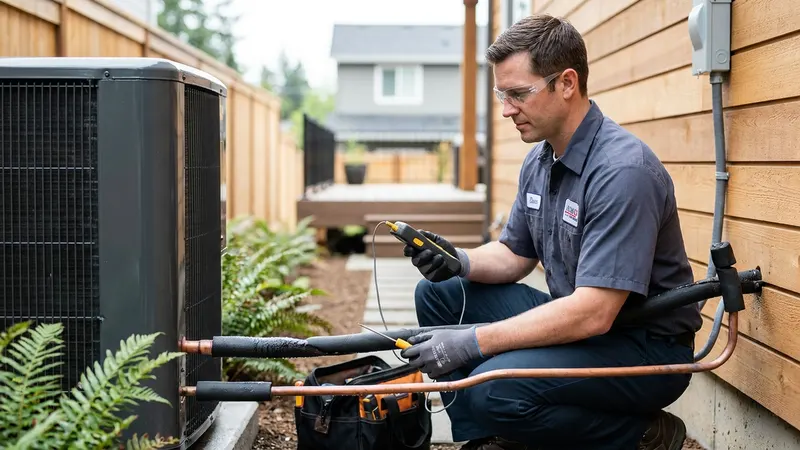
If your HVAC is not blowing cold air, start by checking the thermostat setting, air filter, and breaker because those are the most common problems before refrigerant leaks or compressor failures.
If those basics look fine and the system still runs warm, the next step is usually a professional AC repair service to diagnose airflow, electrical, or refrigerant issues before they get worse.
Key Takeaways
- Simple fixes can often solve common AC problems.
- Professional help is needed for complex issues like leaks.
- Regular maintenance boosts system efficiency and lifespan.
Understanding the Basics of HVAC Systems
HVAC systems are crucial for maintaining comfortable indoor temperatures. They include heating, ventilation, and air conditioning components. Our focus here is on the air conditioning system, which cools and circulates air throughout our homes or offices.
The cooling capacity of an air conditioning system is vital. It determines how well the system can cool a given space. We can relate this to the size and type of the area being cooled. A properly sized unit ensures efficiency and comfort.
Regular maintenance of these systems is key. We recommend calling an HVAC professional for routine inspections. They ensure that the system runs smoothly and efficiently. Professionals can also offer insights into upgrades or adjustments needed.
The primary parts of an air conditioning unit include the compressor, condenser coil, and evaporator coil. Each plays a role in cooling the air. The compressor circulates refrigerant, which absorbs and releases heat.
Issues like refrigerant leaks or a malfunctioning compressor can prevent the system from blowing cold air. Understanding these basics helps us identify when something isn’t working right.
Taking care of our HVAC systems allows us to provide a comfortable living environment. By investing in regular check-ups, we can extend the lifespan of our units. This not only saves money in the long run but also ensures that our homes remain comfortable year-round.
Common Causes of an AC Not Blowing Cold Air
There are several reasons why an air conditioner might not be blowing cold air. These can include issues with the thermostat, refrigerant, clogged components, electrical failures, airflow problems, and complications with ductwork. Identifying the cause can help in finding the right solution to restore cool air in your space.
Thermostat Issues
The thermostat is the first place we look when the air conditioner is not blowing cold air. A faulty thermostat can lead to incorrect temperature readings, causing the AC to not function properly. Make sure it is set to the correct mode and temperature.
Sometimes, you might find that a malfunctioning thermostat needs recalibration or replacement to get accurate readings. We can also check if the thermostat is receiving power. A blown fuse or a tripped breaker can cut power to it, effectively disabling the system.
Refrigerant Problems
Refrigerant is crucial in cooling air. When our AC isn’t blowing cold, low refrigerant levels might be the culprit. The evaporator coil needs sufficient refrigerant to absorb heat. Insufficient refrigerant can cause the coil to freeze.
This can be due to refrigerant leaks, which are not only problematic for cooling but also potentially harmful to the environment. Leaks might require a professional to identify and fix the issue, and then refill the system to the correct refrigerant levels.
Dirty or Clogged Components
Dirty or clogged components can severely impact how well an AC unit functions. A dirty air filter restricts airflow, reducing the system’s efficiency. We need to change or clean air filters regularly to keep airflow optimal.
Condenser coils can also become dirty, hindering heat transfer and making it harder for the unit to produce cool air. If there is a clogged filter, the air handler might struggle to blow cold air. A clogged drain can lead to water damage and other malfunctions.
Electrical and Mechanical Failures
Sometimes, the issue lies with electrical or mechanical components. A blown fuse or tripped breaker can stop the AC from working completely. It’s important to check the electrical panel and reset any tripped breakers.
Mechanical failures, such as a malfunctioning compressor, can also be the root of the problem. The compressor is key to circulating refrigerant, so if it fails, the unit will not cool. Electrical problems within the system might require professional attention.
Airflow Obstructions
Obstructions in airflow are another common reason for AC units not cooling. This often involves clogged air filters. Regular cleaning ensures air can pass freely through the system.
Additionally, furniture or other objects might block vents, reducing airflow into the room. The outdoor unit also needs to be free from debris, as dirty condenser units can struggle to function efficiently.
Ductwork Complications
The duct system is essential for distributing cold air throughout the space. When there are duct leaks, cool air escapes into unconditioned spaces, reducing efficiency. This could be causing the AC to not get cold air where it is needed.
Sometimes, ducts can be improperly sized or designed, leading to airflow problems. Professional assessments and repairs can address ductwork issues and ensure the system operates efficiently. Regular inspections help maintain the integrity of the ducts and the overall cooling system.
Need AC help in Bellevue?
If the quick checks did not restore cooling, book a diagnostic before a small issue turns into a larger repair.
Call (425) 598-0416 Request a QuoteMaintaining Your HVAC System for Optimal Performance
Regular maintenance of our HVAC system is vital to ensure it runs efficiently and keeps our home comfortable. We should focus on routine checks, cleaning or replacing air filters, and scheduling professional servicing for the best results.
Routine Checks and Maintenance
We need to regularly inspect our HVAC system to catch small issues before they become big problems. Checking the thermostat settings ensures that our system is operating correctly. It’s crucial to look for unusual noises or leaks, as these can indicate underlying issues. We should also inspect the outdoor unit. Removing any debris helps maintain proper airflow and efficiency. Inspecting wiring and connections prevents electrical problems that could lead to the air conditioner not blowing cold air.
Replacing or Cleaning Air Filters
Dirty air filters can cause reduced airflow, leading to inefficient operation. We should check filters monthly and clean or replace them every 1-3 months, depending on the manufacturer’s instructions. Replacing air filters regularly can enhance indoor air quality by reducing dust and allergens. It also extends the lifespan of our HVAC system. Clean filters ensure that the air conditioning system doesn’t have to work harder than necessary, thus reducing energy consumption and preventing unnecessary wear and tear.
Scheduled Professional Servicing
While routine maintenance can be done by us, scheduling professional servicing is essential. Technicians have the expertise to identify issues that might not be obvious. They can check refrigerant levels, inspect components, and ensure everything is functioning optimally. A professional inspection at least once a year helps maintain the system’s efficiency. They provide advice on any repairs or upgrades needed to improve performance. Investing in professional servicing ensures our HVAC system remains reliable throughout the year.
When to Consult an HVAC Professional
Sometimes we encounter issues with our HVAC systems that are beyond our expertise. Knowing when to reach out to an expert can save us money and prevent future problems. We’ll look at warning signs indicating professional help is needed and consider how repair costs play a role in our decisions.
Signs You Need Expert Assessment
One key sign is when our HVAC system isn’t blowing cold air consistently. This could point to complex issues like a faulty compressor or refrigerant leaks — situations where booking professional AC repair is the right next step. We should also be alarmed by unusual noises or odors coming from the system, suggesting parts might need replacing.
A spike in energy bills is another red flag. Unseen problems often make systems work harder, wasting energy and hiking costs. Persistent circuit breaker trips can also hint at electrical issues, needing specialized attention.
If the thermostat settings don’t match our room temperatures, it’s a good idea to consult someone. Faulty thermostats can make the whole system inefficient. Finally, any water leaks around the unit could mean the drain is clogged or broken.
Cost Considerations for Repairs and Replacements
Repair costs vary widely depending on the issue. Small fixes like replacing a thermostat are generally affordable. However, larger problems, such as a compressor breakdown, can be quite expensive. It’s essential for us to assess whether repair or replacement offers better long-term savings.
Replacing an entire system may initially be pricier, but we might save on energy costs over time with a more efficient model. Consulting with a professional can help us make informed decisions about whether upgrading is worth the investment based on our specific situation.
Regular maintenance check-ups could prevent costly breakdowns in the first place. Keeping an eye on potential issues allows us to spread out expenses and avoid emergency repairs.