
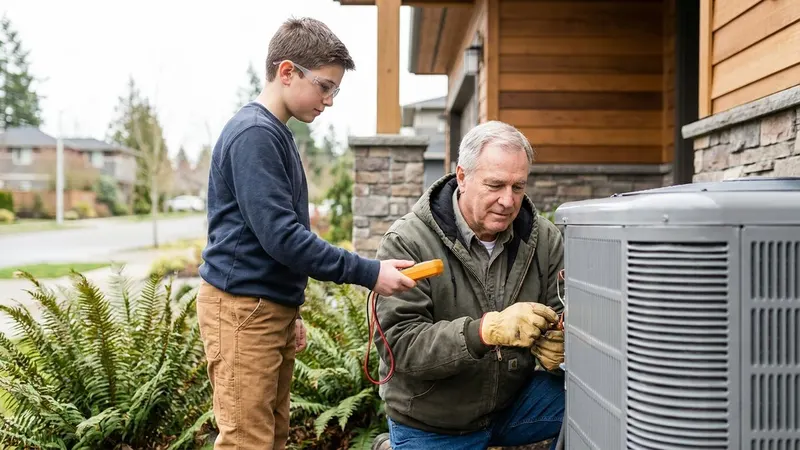
HVAC helpers assist technicians in installing, maintaining, and repairing heating, ventilation, and air conditioning systems. They’re the extra set of hands that keeps jobs moving and helps new workers learn the trade from the ground up.
I’ve seen firsthand how crucial these entry-level professionals are to the HVAC industry. They’re the extra set of hands that make sure your furnace fires up on those frosty mornings and your AC hums along during scorching afternoons. From lugging tools to learning the ropes of complex climate control systems, HVAC helpers are always on their toes.
Let me tell you, it’s not just about brawn - there’s plenty of brain work involved too. These helpers are constantly soaking up knowledge, watching the pros, and getting their hands dirty with real-world experience. It’s a job that’s as rewarding as it is challenging, and I’ve got nothing but respect for the men and women who choose this path.
Key Takeaways
- HVAC helpers provide essential support in maintaining indoor comfort systems
- The role offers hands-on experience and a path to becoming a full-fledged technician
- HVAC helpers need a mix of physical stamina and technical aptitude to succeed
Getting Started in the HVAC Industry
I’ve been in this business for years, and let me tell you, starting as an HVAC helper is a great way to learn the ropes. It’s hands-on, challenging, and can lead to a rewarding career. Let’s dive into what it takes to get started.
Understanding the Role of a HVAC Helper
As an HVAC helper, I’ve done it all. You’ll be the right-hand to experienced technicians, assisting with installations, maintenance, and repairs. It’s not glamorous, but it’s crucial.
Your main tasks include:
- Carrying tools and equipment
- Cleaning work areas
- Assisting with basic repairs
- Learning safety practices
You’ll get dirty, but you’ll learn fast. It’s all about paying attention and being willing to work hard.
Safety is paramount. You’ll learn proper handling of refrigerants, electrical safety, and how to use personal protective equipment.
Educational Pathways
I always tell folks there’s more than one way to skin a cat in this industry. A high school diploma or GED is usually enough to start. But don’t stop there.
Here are some solid options:
- Vocational training programs
- Apprenticeships
- On-the-job training
Apprenticeships are gold. You’ll earn while you learn, getting hands-on experience and classroom instruction. It’s how I started, and I wouldn’t trade it for anything.
Many technical schools offer HVAC programs. They’ll teach you electrical theory, refrigeration principles, and safety practices. It’s a great foundation.
Remember, this field is always changing. Continuing education is key to staying on top of new technologies and regulations.
Need HVAC help? Contact HVAC Service Bellevue at (425) 598-0416 or visit our contact page.
Key Responsibilities of HVAC Helpers
As an HVAC helper, I’ve got a lot on my plate. I’m the right-hand man to the lead technician, helping with all sorts of tasks to keep heating and cooling systems running smoothly. Let me break down the main areas where I lend a hand.
Assisting with Installations
When it comes to putting in new HVAC systems, I’m there every step of the way. I carry equipment and materials to the work site - those units can be heavy! I help set up the workspace, making sure we’ve got all the tools we need.
As the lead tech works on installing the main components, I’m right there beside them. I might be connecting ductwork, running electrical wiring, or mounting thermostats. It’s hands-on work that requires attention to detail.
I also keep the work area tidy. This isn’t just about looking good - it’s about safety too. A clean workspace means fewer accidents and a smoother installation process.
Maintenance and Repairs
Regular upkeep is key to keeping HVAC systems humming along. I play a big role in maintenance tasks. One of my main jobs is cleaning ducts and replacing filters. This helps improve air quality and keeps the system running efficiently.
I also help with routine checks on various parts of the system. We might be looking at belts, motors, or electrical connections. If something needs fixing, I’m there to assist.
Sometimes, repairs are needed. I hand tools to the lead tech, hold parts in place, or help remove old components. It’s all about teamwork to get the job done right.
Aiding with Troubleshooting
When a system isn’t working right, it’s detective time. I help gather information about the problem. This might mean talking to customers about what they’ve noticed or taking readings from different parts of the system.
As we dig into the issue, I keep my eyes peeled for anything unusual. Sometimes a small detail can be the key to solving the problem. I might check air flow, listen for strange noises, or look for signs of wear and tear.
Once we’ve found the issue, I assist with the fix. This could involve anything from replacing a part to adjusting settings. It’s always satisfying to see a system spring back to life after we’ve solved the puzzle.
Skills and Qualities for Success
To make it as an HVAC helper, you’ll need a mix of technical know-how and people skills. I’ve seen firsthand what it takes to succeed in this trade, and let me tell you, it’s not just about turning wrenches.
Technical Skill Development
When I started out, I had to learn the basics fast. You’ll need to get comfortable with hand tools - they’ll be your best friends on the job. Learn to read blueprints and schematics like they’re your favorite comic books. Trust me, it’ll save you headaches down the road.
Safety is no joke in HVAC work. I always say, “Better safe than sorry.” Get familiar with safety protocols and wear your PPE religiously. It might not look cool, but it’ll keep you in one piece.
Problem-solving is key. Each job is like a puzzle, and you’ve got to figure out how all the pieces fit. Don’t be afraid to think outside the box. I’ve seen some creative solutions that would make MacGyver proud.
Professional Growth
Customer service isn’t just for retail folks. In HVAC, you’re dealing with people on their worst days - when their AC is busted in the middle of summer. A little empathy goes a long way. Learn to explain things in plain English, not tech-speak.
Physical stamina is crucial. You’ll be crawling through tight spaces and lifting heavy equipment. I recommend hitting the gym or doing some home workouts to stay in shape.
Time management is a skill you can’t ignore. You’ll often have multiple appointments in a day. Being punctual and organized will set you apart from the pack.
Lastly, never stop learning. The HVAC field is always changing with new tech and regulations. Stay curious and keep up with the latest trends. It’ll make you invaluable to any team.
Career Advancement and Certification
I’ve seen plenty of HVAC helpers climb the ladder to become skilled technicians. It’s all about getting your hands dirty and putting in the work. Let’s look at how you can move up in this trade and why those fancy certifications are worth their weight in gold.
From Helper to Technician
Starting as an HVAC helper, you’re in the perfect spot to learn the ropes. I always tell folks to soak up every bit of knowledge they can. Watch the pros, ask questions, and don’t be afraid to make mistakes - that’s how you learn. As you gain experience, you’ll start handling more complex tasks.
Keep at it, and before you know it, you’ll be ready to step up to a full-fledged technician role. Many employers offer on-the-job training, but don’t shy away from some extra schooling. Night classes or trade school programs can give you an edge.
Value of Certification
Now, let’s talk certifications. They’re not just fancy pieces of paper - they’re your ticket to better pay and more responsibilities. The EPA Section 608 Certification is a must-have if you want to handle refrigerants. It’s the law, and it shows you know your stuff.
Organizations like HVAC Excellence and the Air Conditioning Contractors of America offer certifications that’ll make you stand out. These certs prove you’ve got the skills to tackle tough jobs. Plus, they show employers you’re serious about your craft.
Remember, in this trade, learning never stops. Technology’s always changing, so keep up with continuing education. It’ll keep you sharp and ahead of the game.