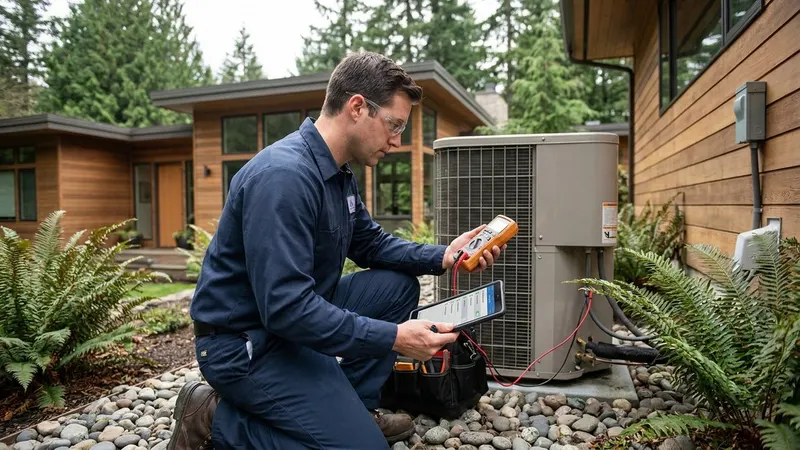
A typical HVAC service call includes a thorough inspection of your heating and cooling system, cleaning of key components, and identification of potential issues before they become major problems. These check-ups are an important part of keeping your system running efficiently and avoiding costly repairs.
During a service call, a technician will check several things to ensure your unit is operating at peak capacity, including airflow, electrical connections, thermostat operation, and signs that point toward AC repair service or heating repairs.
Key Takeaways
- Service calls include system inspection, cleaning, and preventive maintenance
- Regular HVAC check-ups can prevent costly breakdowns and extend system life
- Homeowners should prepare for service calls by clearing space around units and vents
Understanding HVAC Service Calls
A good service call can make all the difference. It’s not just about fixing what’s broken — it’s about keeping your system running smoothly and efficiently. Here’s how it breaks down.
The Role of the HVAC Technician
An HVAC technician wears many hats. The job is to inspect, diagnose, and maintain your heating and cooling system. A service call usually starts with questions about any issues you’ve noticed.
From there, the technician checks the thermostat, inspects electrical connections, and looks for any signs of wear and tear. The goal isn’t just to find problems — it’s to prevent them.
A technician will also clean or replace filters, lubricate moving parts, and check refrigerant levels. It’s all about keeping your system running like a well-oiled machine.
Typical Components of an HVAC System
It helps to know what makes up your HVAC system. The main components a technician looks at during a service call include:
- Furnace or heat pump
- Air conditioner
- Ductwork
- Thermostat
- Blower motor
Each of these parts plays a crucial role in keeping your home comfortable. The furnace is checked for proper ignition and burner operation, while the AC’s compressor and coils get inspected.
The ductwork is also examined for leaks or blockages. And don’t forget the thermostat — it’s the brain of your system, after all.
Preventive Maintenance
Regular HVAC maintenance can save homeowners money and headaches down the road. Here’s why it matters and what you can do to keep your system running well.
Importance of Regular Maintenance
An HVAC tune-up is worth its weight in gold. Neglected systems often work overtime, using far more energy than they should. Regular check-ups can cut your energy bills by up to 15% — real money back in your pocket.
But it’s not just about the cash. A well-maintained system puts out cleaner air, keeping your family breathing easy. There’s longevity, too: maintained units can last 5-10 years longer than neglected ones.
Many HVAC service plans include annual inspections, which catch small issues before they become expensive ones. Think of it like a physical for your system — checking all the vital signs to keep it running strong.
Maintenance Tips for Homeowners
While some tasks are best left to the pros, there’s plenty you can do to keep your HVAC happy between visits. First up, change those filters. It’s a simple task that makes a world of difference — aim for every 1-3 months, depending on use.
Keep your outdoor unit clear of debris. Leaves, twigs, and other yard clutter can clog things up. A gentle hose-down can work wonders, but be careful not to bend those delicate fins.
Thermostat settings are your secret weapon. Program it right, and you’ll save energy without breaking a sweat. In summer, bump it up a few degrees when you’re out.
Lastly, give your vents and registers some attention. A quick vacuum can improve airflow and keep dust at bay. It’s an easy win that takes just a few minutes.
Common Service Call Inclusions
A thorough HVAC service covers several key areas to keep your system running smoothly and efficiently. Here’s what a service call typically includes.
Air Filters and Indoor Air Quality
Air filters are usually first. They’re the first line of defense for your indoor air quality. If they’re clogged or dirty, they get replaced on the spot. Clean filters help your system run more efficiently and keep your air cleaner.
The ductwork is also inspected for signs of mold or debris, which can seriously impact your air quality. If issues turn up, a thorough cleaning is usually recommended.
Sometimes additional air quality measures make sense — UV lights or whole-home air purifiers, for example. These can boost your indoor air quality, especially if you have allergies or respiratory issues.
Electrical Systems Check
Next come the electrical connections. Loose connections can cause your system to malfunction or even create fire hazards, so loose wires get tightened and any signs of wear or damage get flagged.
The capacitor and contactor are tested as well. These components are crucial for starting up your system, and if they’re failing, your AC might not turn on at all.
The thermostat gets checked too. Sometimes what seems like a major HVAC problem is just a faulty thermostat, so it’s confirmed to be calibrated correctly and communicating properly with your system.
Refrigerant and Coils Assessment
Refrigerant is the lifeblood of your AC, so the levels are checked to make sure they’re just right. Too little, and your system won’t cool properly. Too much can damage the compressor.
The coils are inspected as well. Dirty coils hurt your system’s efficiency, so when they’re grimy they get cleaned. This simple step can significantly improve your AC’s performance.
Any leaks that turn up are repaired. Refrigerant leaks are bad news for both your system and the environment.
For your heating system, the burners and heat exchanger get checked. Dirty burners can lead to inefficient heating and higher bills, and a cracked heat exchanger is a serious safety issue that needs immediate attention.
On the cooling side, the compressor and fan motors are tested. These are the workhorses of your AC, and if they’re not running smoothly, your whole system suffers.
Airflow is checked too. Proper airflow is key to both heating and cooling efficiency, so fan speeds may be adjusted or blockages cleared.
Condensate Drain Inspection
Last but not least, the condensate drain gets checked. A clogged drain can lead to water damage and mold growth, so any blockages are cleared so the water flows freely.
If your system has a condensate pump, it’s tested to ensure it’s working properly. A faulty pump can lead to water backing up into your home.
It may also be worth installing a float switch if you don’t have one. This can shut off your AC if the drain line gets clogged, preventing water damage.
Need to book a service call?
If your system is overdue for a checkup or showing warning signs, a diagnostic visit can confirm what needs attention now.
Call (425) 598-0416
Request a Quote
Troubleshooting Unusual Signs
Your HVAC system can sometimes act up in strange ways. Here’s how to figure out what’s going on.
Dealing with Strange Noises
When your HVAC starts making strange sounds, it’s trying to tell you something. The noises range from bangs to whistles, and each one points to a different problem.
Rattling or clanking? That could be a loose part — the fan blades or motor mounts are a good place to start. Squealing might mean a belt issue. Hissing can signal a refrigerant leak, which is a serious problem.
Here’s a quick rundown of common noises:
- Banging: Loose or broken part
- Whistling: Air leak in ductwork
- Clicking: Electrical component problem
- Buzzing: Loose electrical connections
Don’t ignore these sounds. They won’t go away on their own, and they could lead to bigger issues down the line.
When to Call for a Technician
Some fixes are DIY-friendly, but others call for a pro. If you’ve tried basic troubleshooting and the problem persists, it’s time to pick up the phone.
You should call an HVAC technician if:
- Your energy bills spike suddenly
- You smell gas or burning
- The system won’t turn on or off
- There’s little or no airflow
- You hear loud or persistent noises
These issues often need specialized tools and expertise. If you’re seeing any of these signs, scheduling an AC repair service sooner rather than later typically prevents a minor fix from becoming a full replacement.
Regular maintenance can prevent many of these issues, so annual check-ups are a smart way to keep your system running smoothly.
Optimizing Thermostat Use
Optimizing your thermostat use is one of the easiest ways to keep your system running efficiently. It’s not complicated, but it does take a bit of know-how.
Start with your thermostat settings. Set your thermostat to match your daily routine — there’s no reason to heat or cool an empty house. Program the temperatures to adjust when you’re away or asleep.
Here’s a quick breakdown to aim for:
- Wake-up time: 68°F (heating) or 75°F (cooling)
- Away from home: 60°F (heating) or 80°F (cooling)
- Evening at home: 68°F (heating) or 75°F (cooling)
- Bedtime: 60°F (heating) or 78°F (cooling)
Cranking the heat or AC to extremes doesn’t actually help — it just makes your system work harder and raises your bills. Instead, make small adjustments. Even a degree or two can make a big difference in energy use.
Don’t forget about maintenance. A clean filter helps your thermostat read temperatures accurately, so a clean filter really does mean a happier HVAC system.
Lastly, consider upgrading to a smart thermostat. These can learn your habits and adjust automatically, and you can control them from your phone.
Ductwork and Airflow Management
Ductwork is the unsung hero of your HVAC system — like the circulatory system for your home’s air. A good service call always includes a close look at those ducts.
Ductwork is the network of passages that moves air around your house. It’s crucial for both heating and cooling. Without good ducts, you’re essentially trying to cool the great outdoors.
One common problem is leaky ducts. These can waste up to 30% of your conditioned air — money flying right out of your wallet — so any leaks get sealed up tight.
But it’s not just about leaks. The size and layout of your ductwork matter too. If they’re too small or have too many bends, your system has to work harder. It’s like trying to breathe through a straw — not efficient.
Airflow management is another key part of a service call. Nothing should be blocking your vents or returns. A blocked vent is like a clogged artery — bad news for your system’s health.
The ducts are also checked for dust and debris. Clean ducts mean clean air, and they help your system run smoother, saving you money on energy bills.
Wrapping Up the Service Call
As an HVAC service call wraps up, there are a few final steps worth knowing about.
First, the system gets a final once-over to make sure everything’s running smoothly before the technician packs up.
Next comes cleanup. Your home should look just as tidy as it did before the visit — maybe even a bit cleaner.
Here’s a quick checklist of what happens before the technician heads out:
- Test the system
- Clean up the work area
- Explain the work done
- Answer any questions
- Provide a written report
A good technician will walk you through everything done during the service call in plain English — no technical jargon.
Have questions? A service call is a good time to ask, so you understand your system inside and out.
Before leaving, the technician hands you a written report covering what was found, what was fixed, and any recommendations for the future.
Frequently Asked Questions
Here are some common questions about HVAC service calls and what you can expect.
What items are usually checked during an HVAC maintenance visit?
A maintenance visit usually starts with a complete system check. This includes inspecting the main components, checking airflow, and looking at refrigerant lines. The technician will clean the system and perform any routine maintenance specific to your unit.
The thermostat is tested and all electrical connections are checked. Safety matters, so a gas-powered system is also inspected for any gas leaks.
How frequently do HVAC systems need professional servicing?
You should schedule a service call at least once a year, ideally before the peak heating or cooling season hits.
If you notice any problems with your system, don’t wait for your annual check-up. Get it looked at right away to prevent bigger issues down the line.
Can you outline what an HVAC service contract typically covers?
A service contract usually includes regular maintenance visits, typically twice a year, to clean and inspect your system before the heating and cooling seasons.
Many contracts also offer priority service for repairs and discounts on parts and labor. Some even include 24/7 emergency repair service, which can be a real lifesaver when your AC quits on a hot summer night.
What are the common issues looked for during a routine HVAC inspection?
A routine inspection looks for worn belts, dirty filters, and low refrigerant levels. These are often the culprits behind poor performance.
It also covers signs of wear and tear on components like the compressor and fan motor. Catching these issues early can save you from costly breakdowns later.
How does preventive maintenance for air conditioning systems save on costs?
Preventive maintenance is like changing the oil in your car — it keeps everything running smoothly and efficiently. When your AC is running at peak efficiency, it uses less energy, which means lower utility bills for you.
Regular maintenance also extends the life of your system. Well-maintained units last years longer than neglected ones, which means a lot of money saved on premature replacement.
What’s the ballpark price range for a professional HVAC service visit?
The cost can vary depending on your location and the type of service you need. For a basic maintenance visit, you’re usually looking at $75 to $200.
If you need repairs, the cost can go up from there. But investing in regular maintenance can save you a lot on major repairs down the line.