
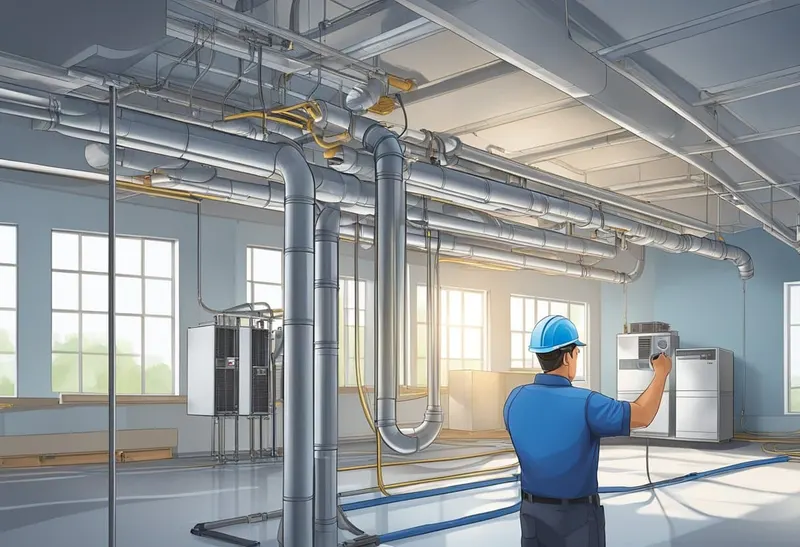
HVAC technician requirements include a training program or apprenticeship, state licensing, and EPA 608 certification. If you need hands-on help, see our AC repair service page.
Need HVAC help in Bellevue?
Contact HVAC Service Bellevue for practical help with repairs, maintenance, and replacement planning.
Call (425) 598-0416 Request a QuoteUnderstanding HVAC Systems
HVAC systems keep our homes and buildings comfortable year-round. They’re complex but essential for modern living. I’ve seen firsthand how these systems work wonders when installed and maintained properly.
Components and Functionality
The heart of any HVAC system is the central unit. It’s like the engine of a car, doing the heavy lifting. You’ve got your furnace for heating, air conditioner for cooling, and air handler to move the air around.
The thermostat is the brains of the operation. It tells the system when to kick on and off. Don’t skimp on this part - a good programmable thermostat can save you big bucks on energy bills.
Ductwork is the highway for your conditioned air. I can’t stress enough how important proper ductwork is. Leaky ducts can waste up to 30% of your energy!
Ventilation systems keep fresh air flowing. They remove stale air and bring in the good stuff. Trust me, your lungs will thank you.
Types of HVAC Systems
I’ve installed all kinds of HVAC systems over the years. Here are the main types you’ll come across:
- Split systems: Most common in homes. Indoor and outdoor units work together.
- Packaged systems: All-in-one units, often used in small commercial buildings.
- Ductless mini-splits: Great for additions or rooms without ductwork.
- Geothermal systems: Use earth’s temperature to heat and cool. Pricey upfront, but super efficient.
Each has its pros and cons. The right choice depends on your space, climate, and budget.
Heating and Cooling Principles
HVAC systems work on some basic principles. For heating, we’re talking about creating warmth and distributing it. Furnaces burn fuel or use electricity to heat air. Boilers heat water for radiators or radiant floor systems.
Cooling is all about removing heat from the air. Air conditioners use refrigerant to absorb heat inside and release it outside. It’s like magic, but it’s just science.
Heat pumps can both heat and cool by moving heat in or out. They’re super efficient in moderate climates.
Proper sizing is crucial. An oversized system will short cycle, wasting energy. Undersized? It’ll run constantly and never keep up. I always make sure to do a load calculation before installing any system.
Starting a Career in HVAC
I’ve been in the HVAC trade for years, and let me tell you, it’s a rewarding career path. To get started, you’ll need the right education, hands-on experience, and certifications. Let’s break it down.
Education Requirements
First things first, you’ll need a high school diploma or GED. That’s your foundation. After that, HVAC training programs are your next step. These programs usually take 6 months to 2 years to complete.
Here’s what you’ll learn:
- Basic electrical theory
- Refrigeration principles
- HVAC system design
- Safety practices
I recommend looking for programs accredited by HVAC Excellence or PAHRA. They’ll give you a solid knowledge base to build on.
Apprenticeship Programs
Now, this is where the rubber meets the road. HVAC apprenticeships typically last 3-5 years. You’ll work alongside experienced techs, learning the tricks of the trade.
During your apprenticeship, you’ll:
- Install and repair HVAC systems
- Learn about building codes
- Gain customer service skills
It’s hard work, but it’s worth it. You’ll be earning while you’re learning, and trust me, that hands-on experience is priceless.
HVAC Certification Path
Once you’ve got your education and apprenticeship under your belt, it’s time for certification. The EPA Section 608 certification is a must-have. It shows you can safely handle refrigerants.
Other certifications to consider:
- NATE (North American Technician Excellence)
- HVAC Excellence
- ASHRAE (American Society of Heating, Refrigerating and Air-Conditioning Engineers)
These certs prove you know your stuff. They’ll make you more attractive to employers and can lead to higher pay. Remember, in this trade, learning never stops. Keep updating your skills and certifications as technology advances.
Licensing and Certifications
Getting your HVAC license and certifications is crucial for your career. Trust me, I’ve seen firsthand how these credentials open doors and boost your earning potential. Let’s break down the key requirements you’ll need to tackle.
HVAC Licensing Requirements
HVAC licensing isn’t one-size-fits-all. Each state has its own rules, and they can be pretty different. In some places, you’ll need a license to work legally. In others, it’s not required.
Most states want you to have some combination of:
- Education (usually 1-2 years)
- On-the-job experience (2-5 years)
- Passing an exam
Don’t forget about local licensing requirements too. Some cities have their own rules on top of state regulations. It’s a lot to keep track of, but I promise it’s worth it.
EPA 608 Certification
This one’s non-negotiable, folks. If you’re handling refrigerants, you need EPA 608 certification. It’s federal law.
There are four types:
- Type I: Small appliances
- Type II: High-pressure systems
- Type III: Low-pressure systems
- Universal: All systems
I always recommend going for the Universal. It covers everything and makes you more versatile. You’ll need to pass an exam, but with some study time, you’ve got this.
North American Technician Excellence (NATE)
NATE certification is the gold standard in our industry. It’s not legally required, but it shows you know your stuff.
NATE offers different certifications:
- Core exam (entry-level knowledge)
- Specialty exams (advanced skills)
You’ll need at least two years of experience before taking the tests. It’s tough, but passing NATE exams can really set you apart from the competition. I’ve seen it lead to better job opportunities and higher pay for many techs I’ve worked with.
State-Specific Licensing
Let me tell ya, HVAC licensing ain’t a one-size-fits-all deal. Each state’s got its own rules and hoops to jump through. I’ve seen it all in my years on the job, and I’m here to break it down for you.
Alabama HVAC License Requirements
In Alabama, they don’t mess around with HVAC licensing. You’ll need to get certified by the Alabama Board of Heating, Air Conditioning, and Refrigeration Contractors. Here’s what you’re looking at:
- Two years of work experience
- Passing a written exam
- Proof of liability insurance
Trust me, it’s worth the effort. Once you’re licensed, you can work anywhere in the state. Just remember to renew every year and keep up with those continuing education credits.
Alaska HVAC License Requirements
Now, Alaska’s a whole different ballgame. They don’t have a specific HVAC license, but don’t think you’re off the hook. You’ll need to get a mechanical administrator license if you want to work as an HVAC contractor. Here’s the deal:
- Four years of work experience
- Passing a written exam
- $250 license fee
It’s not easy, but nothing worth doing ever is. This license covers heating, air conditioning, and sheet metal work. Make sure you’re prepared for the cold up there!
Variations in State HVAC Requirements
I’ve seen a lot of differences across states in my time. Some places, like California, don’t require a license for HVAC techs, but contractors need a C-20 license. Other states might ask for:
- Specific education or apprenticeship hours
- Different types of exams (practical and written)
- Various levels of licensing (apprentice, journeyman, master)
My advice? Always check with your state’s licensing board. Requirements can change, and you don’t want to get caught with your pants down. Stay informed, stay licensed, and you’ll do just fine in this trade.