
HVAC school costs between $1,200 and $15,000 depending on the program and school. If you need hands-on help, see our AC repair service page.
Need HVAC help in Bellevue?
Contact HVAC Service Bellevue for practical help with repairs, maintenance, and replacement planning.
Call (425) 598-0416 Request a QuoteUnderstanding HVAC and the Importance of Proper Training
As an HVAC technician, I’ve seen firsthand how crucial proper training is in this field. HVAC stands for Heating, Ventilation, and Air Conditioning. It’s the backbone of comfort in our homes and workplaces.
The HVAC industry is always changing. New tech comes out faster than you can say “thermostat.” That’s why staying up-to-date is key.
I’ve met guys who thought they could skip formal training. Let me tell you, it never ends well. Proper schooling teaches you the ins and outs of:
- Refrigeration cycles
- Electrical systems
- Ductwork design
- Safety protocols
Without these basics, you’re like a fish out of water on the job site.
HVAC school costs can vary, but it’s an investment in your future. Trust me, the skills you learn are worth every penny.
In my years in the field, I’ve seen the HVAC industry grow by leaps and bounds. It’s not just about fixing AC units anymore. We’re talking about:
- Smart home integration
- Energy efficiency
- Indoor air quality
These areas need trained pros who know their stuff.
I always tell rookies: get the right training. It’s the foundation of a solid career in HVAC. You’ll thank yourself later when you’re troubleshooting complex systems with confidence.
Pathways to Becoming an HVAC Technician
There are a few solid paths to kickstart your HVAC career. I’ve seen folks succeed through different routes, so let’s break ‘em down.
Certificate Programs
HVAC certificate programs are a quick way to get your foot in the door. These usually take 6-12 months to complete. I’ve met plenty of techs who started this way.
You’ll learn the basics of heating, cooling, and ventilation systems. Most programs cover:
- Refrigeration principles
- Electrical systems
- Safety procedures
- Troubleshooting techniques
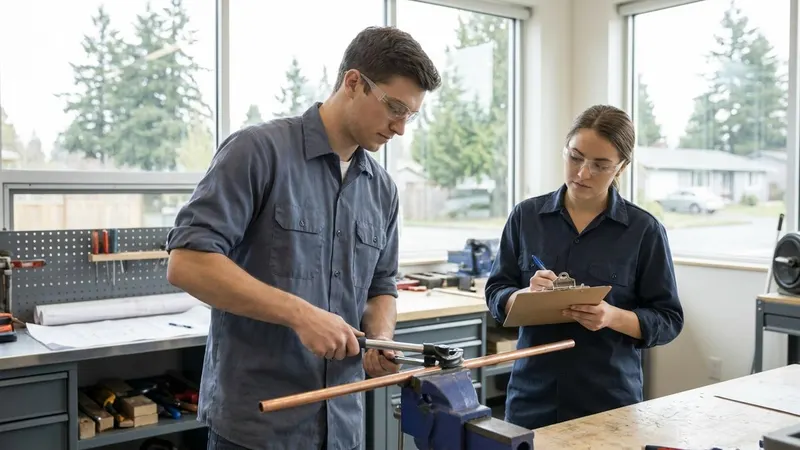
HVAC schools often offer hands-on training too. This practical experience is gold when you’re starting out.
The cost can vary, but expect to pay between $1,200 to $15,000. It’s an investment in your future, and many folks find it worth every penny.
Associate Degrees
If you’re looking for a deeper dive, an associate degree in HVAC might be your ticket. These programs typically take about two years to complete.
You’ll get a more comprehensive education, covering:
- Advanced HVAC theory
- Building codes and regulations
- Energy efficiency
- Business management
Many programs include internships, giving you real-world experience. That’s invaluable when you’re job hunting.
The cost is higher than a certificate, usually ranging from $15,000 to $35,000. But remember, you’re getting a broader skill set that can open more doors.
Apprenticeships
Now, if you’re the hands-on type like me, an apprenticeship might be right up your alley. You’ll earn while you learn, working alongside experienced pros.
HVAC apprenticeships typically last 3-5 years. You’ll split your time between:
- On-the-job training
- Classroom instruction
The best part? Apprenticeships are often paid. You might start around $15-$20 an hour, with raises as you progress.
Many unions and trade organizations offer apprenticeship programs. They’re competitive, but well worth the effort to get in.
Choosing the Right HVAC School
I’ve been in the trades for years, and let me tell you, picking the right HVAC school is crucial. It can make or break your career before it even starts. Let’s dive into the options out there and how to choose what’s best for you.
Community Colleges
Community colleges are a solid choice for HVAC training. I’ve seen many successful techs come out of these programs. They often offer two-year associate degrees in HVAC technology.
These schools usually have lower tuition costs than four-year colleges. That’s a big plus in my book. You’ll get a mix of classroom learning and hands-on training.
Many community colleges have ties to local HVAC companies. This can help you land a job after graduation. Just make sure the program is accredited. That’s key for getting licensed down the road.
Trade and Vocational Schools
Now, trade and vocational schools are where I’ve seen some of the best hands-on training. These schools focus on practical skills you’ll use every day on the job.
Programs at these schools are often shorter, sometimes just 6-12 months. That means you can get into the workforce faster. It’s perfect if you’re itching to start earning.
Look for schools with up-to-date equipment. The HVAC field changes fast, and you want to learn on the same stuff you’ll use in the field.
Deciding Between HVAC Programs
Choosing between these options comes down to your goals and situation. I always tell folks to consider a few key things.
First, think about your learning style. Do you prefer hands-on work or more academic study? That’ll help you decide between trade schools and community colleges.
Next, look at the job placement rates. A good school should be proud of where their grads end up. Ask about their connections with local HVAC companies.
Don’t forget about cost. Compare tuition, fees, and financial aid options. Sometimes the cheapest option isn’t the best in the long run.
Lastly, check for accreditation. It’s not just a fancy word - it matters for your future career prospects and licensing.
Cost Breakdown of HVAC Training
I’ve been in the trades for decades, and let me tell you, HVAC school costs can add up quick. But don’t let that scare you off - it’s an investment in your future. Let’s break down where your money’s going.
Tuition and Fees
Tuition’s the big one, folks. HVAC certificate programs can run you between $1,200 and $15,000. That’s a wide range, I know. It depends on the school and program length. Community colleges are usually cheaper, while private schools might set you back $10,000 to $30,000.
Don’t forget about fees. Registration, lab fees, technology fees - they can sneak up on you. Always ask for a full breakdown before you sign up. Some schools lump everything together, others nickel and dime you.
Remember, longer programs cost more but might give you better skills. It’s about balance.
Books and Supplies
Now, you can’t learn without the right materials. Textbooks, workbooks, safety gear - it all adds up. I’ve seen students spend anywhere from $500 to $1,500 on books and supplies.
Here’s a quick list of what you might need:
- Textbooks (new or used)
- Safety glasses and work boots
- Notebook and writing supplies
- Calculator (trust me, you’ll use it)
Pro tip: Check if your school has a tool borrowing program. It can save you big bucks.
Tools and Equipment
Listen up, because this is important. Good tools are an HVAC tech’s best friend. You’ll need your own set, and it ain’t cheap. Budget about $1,000 to $3,000 for a decent starter kit.
Here’s what you’ll likely need:
- Multimeter
- Refrigerant gauges
- Pipe wrenches
- Screwdrivers and pliers
- Leak detector
Some schools include basic tools in their program cost. Always ask what’s provided and what you need to buy yourself.
Additional Costs
There’s always something extra, isn’t there? Let’s talk about those hidden costs that can catch you off guard.
First up, certification exams. The EPA 608 certification is a must, and it’ll run you about $100. Other certs like NATE can cost $100-$300 each.
Don’t forget about living expenses if you’re moving for school. Rent, food, transportation - it all adds up. If you’re doing this full-time, factor in lost wages too.
Good news is, financial aid might be available. Fill out that FAFSA form - grants and loans can make a big difference. Some employers even offer tuition reimbursement if you work for them after graduating.
Remember, it’s an investment in yourself. Do it right, and you’ll be fixing furnaces and cashing checks in no time.
Length and Structure of HVAC Programs
HVAC training programs come in all shapes and sizes. I’ve seen ‘em all, and there’s no one-size-fits-all approach.
The shortest programs are certificate courses that can take as little as 6 months. These are great if you want to get your hands dirty fast.
On the flip side, associate degree programs typically run about 2 years. They dive deeper into the nitty-gritty of HVAC systems.
Here’s a quick breakdown of program lengths:
- Certificate: 6-12 months
- Diploma: 12-18 months
- Associate Degree: 18-24 months
Now, don’t let those numbers scare you. The time flies by when you’re learning something you love.
Program costs can vary widely, from about $1,200 to $35,000. It all depends on the type of program and the school you choose.
Remember, these programs aren’t just about sitting in a classroom. You’ll get plenty of hands-on experience too. It’s all about preparing you for the real world of HVAC.
In my experience, the best programs mix classroom learning with practical training. You’ll learn the theory, then put it into practice right away.