
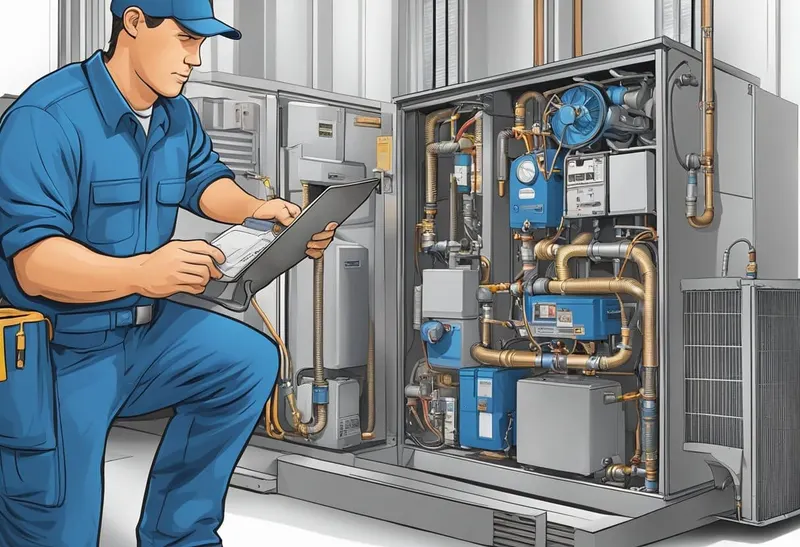
As an HVAC/R technician, I’ve seen my fair share of busy days and slow ones. But you’re probably wondering just how many service calls we typically handle in a day. Well, let me tell you, it varies quite a bit. Most HVAC/R techs handle between 3 to 6 service calls per day, depending on the complexity of the jobs and the season.
I’ve had days where I’ve zipped through 5 or 6 quick fixes, changing out capacitors or cleaning clogged filters. Other times, I’ve spent an entire day on a single job, wrestling with a stubborn compressor or troubleshooting a tricky electrical issue. It’s all part of the job, and that’s what keeps things interesting.
The number of calls can also change with the seasons. During the peak of summer or the dead of winter, we’re often running from job to job, sometimes even on weekends. But in the milder months, things can slow down a bit, giving us a chance to catch our breath and maybe even enjoy a Sunday off.
Key Takeaways
- HVAC/R technicians typically handle 3-6 service calls per day on average
- The number of daily service calls varies based on job complexity and seasonal demand
- Efficient scheduling and time management are crucial for HVAC/R technicians to meet customer needs
Understanding HVAC/R Service Calls
HVAC/R service calls are a crucial part of keeping homes and businesses comfortable. I’ve seen firsthand how these visits can make a big difference in system performance and efficiency.
Basics of HVAC/R Systems
HVAC/R stands for Heating, Ventilation, Air Conditioning, and Refrigeration. These systems work hard to keep our spaces cozy. They have several key parts:
- Furnace or heat pump for warmth
- Air conditioner for cooling
- Ductwork to move air around
- Thermostat to control temperature
I’ve crawled through countless attics and basements to check on these components. It’s not always pretty, but it’s essential work. Regular maintenance keeps these systems running smoothly.
What Constitutes a Service Call
A service call is when a tech like me comes out to your place to fix or check on your HVAC/R system. Here’s what typically happens:
- You notice a problem and give us a ring.
- We schedule a time to come out.
- I show up, ready to get my hands dirty.
During the visit, I might do a few different things. Sometimes it’s a quick fix, like changing a filter. Other times, I’m diagnosing complex issues that need more work. Either way, my goal is to get your system back up and running efficiently.
The Life of an HVAC Technician
As an HVAC tech, I’ve got a packed schedule and lots of tools in my truck. Let me tell you about my typical day and the gear I use to keep folks comfortable.
Daily Duties and Responsibilities
I start my day early, often before sunrise. I review my schedule, which usually includes 4-6 service calls during peak season. My job involves a mix of tasks:
- Responding to emergency calls
- Performing routine maintenance
- Installing new systems
- Diagnosing and fixing issues
I spend a lot of time in attics, crawl spaces, and on rooftops. It’s not always glamorous, but it’s rewarding work. I interact with different customers each day, explaining problems and solutions in plain language.
Some days are unpredictable. I might get called to a frozen AC unit or a furnace that won’t light. I need to be ready for anything.
Tools and Equipment Used
My truck is my mobile workshop. Here’s a peek at some essential tools I carry:
- Multimeter for electrical testing
- Refrigerant gauges
- Vacuum pump
- Recovery machine
- Various hand tools (screwdrivers, wrenches, pliers)
- Power tools (drill, reciprocating saw)
- Leak detectors
- Safety gear (gloves, goggles, hard hat)
I also use specialized diagnostic equipment to troubleshoot complex systems. Technology has changed our field, so I keep up with the latest tools and techniques.
My phone is crucial too. I use it to check schedules, log work, and communicate with the office and customers.
Optimizing Service Call Efficiency
I’ve learned a thing or two about making HVAC service calls run smoother. It’s all about smart scheduling, efficient routing, and top-notch customer service. Let me break it down for you.
Scheduling and Routing
When it comes to scheduling, I always say it’s like putting together a puzzle. You gotta fit the right pieces in the right spots. I use advanced scheduling software to keep things humming. It helps me plan my day and get to more jobs.
Here’s my game plan:
- Group calls by location to cut down on drive time
- Schedule tougher jobs early when I’m fresh
- Leave some wiggle room for emergencies
I also keep my eye on traffic patterns. No sense sitting in rush hour when I could be fixing someone’s AC!
Customer Interaction and Service
Now, let’s talk about the heart of the job – the customers. I treat every home like it’s my own. When I show up, I’m ready to roll up my sleeves and get to work.
My customer service checklist:
- Greet with a smile and firm handshake
- Listen carefully to their concerns
- Explain the problem in simple terms
- Offer options, not just one solution
- Clean up like I was never there
I always aim to boost customer satisfaction. Happy customers mean more calls, and that’s good for everyone. I make sure to follow up after big jobs too. It shows I care and often leads to more work down the line.
Technological Integration in Service Management
I’ve seen firsthand how tech has changed the HVAC game. It’s like having a super-powered toolbox right in your pocket. Let me break it down for you.
Use of Management Software
I’m tellin’ ya, these management software systems are a game-changer. They help us organize workflows and allocate resources like never before. It’s like having a personal assistant who never sleeps.
With these tools, I can see all my jobs for the day at a glance. No more shuffling through paper schedules or playing phone tag. Plus, it helps me knock out more service calls in a single day.
The best part? Real-time updates. If a job takes longer than expected, the system adjusts my schedule automatically. It’s like magic, I tell ya!
Two-Factor Authentication for Data Security
Now, let’s talk security. In this digital age, protecting customer info is as important as fixing their HVAC systems. That’s where two-factor authentication comes in.
When I log in to our system, I don’t just use a password. I also need a code from my authenticator app. It’s like having a double-locked door – extra safe.
If my phone’s dead, no sweat. I’ve got backup codes stashed away. It might seem like overkill, but trust me, it’s worth it. Your customers’ data is as precious as the cool air flowing through their vents.
Best Practices for Service Call Management
I’ve learned a thing or two about managing service calls in my years on the job. Let me share some tricks of the trade to keep your customers happy and your techs working like a well-oiled machine.
Ensuring Quality and Efficiency
First things first, you gotta have a solid system for prioritizing calls. I always tell my crew to use a triage protocol for sorting out the emergencies from the routine stuff. Life-threatening situations and major equipment failures go straight to the top of the list.
Next up, tracking the right metrics is key. I keep tabs on:
- First-time fix rates
- Average service duration
- Number of daily calls completed
These numbers tell me how my team’s performing and where we can improve.
To really boost efficiency, I recommend ride-alongs between office staff and techs. It’s eye-opening for both sides. The office folks see what it’s like in the field, and the techs get a peek at how dispatch juggles all those calls.
Follow-up Procedures to Gauge Customer Satisfaction
After every job, I make it a point to check in with the customer. It’s not just about being nice – it’s about nipping any issues in the bud before they blow up.
I use a simple 3-question survey:
- Was the tech on time?
- Did they fix the problem?
- Would you recommend us to a friend?
Quick and easy, but it tells me a lot. If I spot a pattern of unhappy customers, I know it’s time to retrain or make some changes.
I also encourage my techs to leave behind some info on maintenance tips. It shows we care and often leads to repeat business. Plus, it cuts down on unnecessary callbacks.
Troubleshooting Common HVAC/R Issues
I’ve seen it all when it comes to HVAC/R problems. From frozen coils to furnaces that won’t fire up, these systems can throw some real curveballs. Let’s dig into the most common issues I tackle on my service calls.
Air Conditioning Malfunctions
When I roll up to an AC job, I’m often greeted by a sweaty homeowner. The first thing I check is the thermostat. You’d be surprised how many calls are solved by replacing batteries or fixing a faulty wire.
Next, I inspect the air filter. A clogged filter can cause all sorts of trouble, from weak airflow to frozen coils. I always keep spares in my truck to swap out on the spot.
If those quick fixes don’t do the trick, I move on to the outdoor unit. Dirty condenser coils are a common culprit. I give them a good cleaning and check refrigerant levels. Low refrigerant often points to a leak, which I’ll track down and patch up.
Heating System Repairs
When the cold hits, furnace problems can leave folks in a real pickle. I start by checking the basics – is the gas on? Is the pilot light lit? Sometimes it’s as simple as that.
For electric systems, I’ll test the heating elements and make sure the blower motor is running smooth. A faulty ignitor or flame sensor can also cause headaches, so I always give those a once-over.
If everything looks good but the heat’s not kicking on, I’ll take a peek at the heat exchanger. Cracks here can be dangerous, so I don’t mess around. Safety first, always.
Proper airflow is key for any heating system. I check the ductwork for leaks or blockages and make sure all the vents are open and unobstructed.
Useful Tips for HVAC/R System Maintenance
As an HVAC pro, I’ve seen it all. Let me share some tips to keep your system purring like a kitten.
First off, change those air filters regularly! I can’t tell you how many service calls I’ve had where a dirty filter was the culprit. It’s an easy fix that’ll save you a bundle.
Next up, keep those outdoor units clear. I’ve seen units choked by leaves, grass clippings, you name it. Give ’em some breathing room, folks!
Don’t forget about your thermostat. A programmable one can save you big bucks on energy bills. I’ve installed hundreds, and customers always thank me later.
Here’s a quick checklist I use:
- Clean or replace filters monthly
- Clear debris from outdoor units
- Check thermostat settings
- Listen for unusual noises
- Schedule professional maintenance twice a year
Speaking of pro maintenance, don’t skimp on it. I’ve seen too many systems fail because folks tried to DIY. Trust me, a good technician can spot issues before they become expensive problems.
Lastly, pay attention to your system. If it’s working harder than usual or making weird noises, give us a call. We’d rather fix a small issue than replace your whole system.
Building Customer Trust and Retention
Let me tell ya, customer trust and retention are the bread and butter of any HVAC business. I’ve seen it time and time again – happy customers are loyal customers.
First things first, we gotta nail those service calls. Every time I’m in someone’s home, I treat it like my own. That means:
- Being on time
- Explaining the problem clearly
- Offering fair pricing
- Cleaning up after myself
It’s the little things that count, folks. I always make sure to answer any questions the homeowner might have. No one likes feeling left in the dark about their heating or cooling system.
Now, here’s a pro tip: follow-up calls. I like to check in a week after a big job to make sure everything’s running smoothly. It shows I care, and it gives me a chance to catch any issues early.
Remember, customer satisfaction isn’t just about fixing the AC. It’s about building relationships. I’ve got customers who’ve been with me for years because they know they can trust me to do right by them.
Here’s a quick breakdown of what I focus on:
| Key Aspect | Why It Matters |
|---|---|
| Reliability | Builds trust |
| Communication | Keeps customers informed |
| Quality Work | Ensures satisfaction |
| Fair Pricing | Encourages repeat business |
By sticking to these principles, I’ve seen my customer retention rates soar. It’s not rocket science, just good old-fashioned service with a smile.
Digital Presence and Online Account Management
Having an online presence is crucial for HVAC businesses these days. It’s not just about having a website – you need to make it easy for customers to interact with you digitally. Let’s dive into the nitty-gritty of setting up and managing your online accounts.
Creating and Managing Your Online Account
First things first, you’ll want to set up your online account. I’ve seen too many HVAC pros skip this step, but trust me, it’s worth it. Start by choosing a username that’s professional and easy to remember. Your email address is key here – make sure it’s one you check regularly.
Once you’re set up, take some time to fill out your profile. Add your services, areas you cover, and maybe even a photo of your smiling mug. It helps customers feel like they know you before they even call.
Remember to keep your account up to date. Nothing’s worse than outdated info when a customer’s furnace is on the fritz at 2 AM.
Password and Account Recovery Options
Now, let’s talk security. I can’t stress this enough – choose a strong password. Mix it up with uppercase, lowercase, numbers, and symbols. It’s a pain, I know, but it’ll keep the bad guys out.
Don’t use the same password for everything. I’ve seen too many folks get burned that way. If you’re worried about forgetting, use a password manager. They’re lifesavers.
Set up account recovery options too. Add a backup email or phone number. Some sites let you set security questions – pick ones only you’d know the answer to.
If you ever need to reset your password, don’t panic. There’s usually a “Forgot Password” link. Click it, follow the steps, and you’ll be back in business in no time.
Legal and Ethical Considerations in HVAC/R Services
As an HVAC/R pro, I know it’s not just about fixing systems. We’ve got to play by the rules and do right by our customers.
First off, licensing and certification are must-haves in this trade. I make sure my paperwork’s always up to date.
When I’m on a service call, I follow a solid code of ethics:
• Be honest about what needs fixing
• Give fair prices
• Respect the customer’s property
• Keep their info private
I’ve seen techs try to upsell unnecessary services. That’s a big no-no in my book. Misdiagnosing problems or pushing unneeded repairs is just plain wrong.
Safety’s another huge deal. I always follow proper procedures and use the right equipment. Cutting corners puts everyone at risk.
Staying up-to-date on building codes and environmental regulations is part of the job too. It’s not always easy, but it’s crucial for doing quality work.
Frequently Asked Questions
I’ve heard all sorts of questions about HVAC work over the years. Let me break down some of the most common ones I get asked about our day-to-day jobs and what folks can expect when they call us out.
How long does it typically take to knock out an HVAC job?
It really depends on what we’re dealing with. A simple filter change or thermostat fix? I can usually wrap that up in 30 minutes or less.
But if we’re talking about replacing a whole system or fixing a major breakdown, that could take anywhere from a few hours to a full day. Every job’s different, just like every house.
What kind of coin are you parting with for a standard HVAC service hit-up?
The cost can vary quite a bit. A basic service call might run you around $75 to $200. But if we’re getting into repairs or part replacements, that price can climb.
For bigger jobs like installing a new system, you could be looking at several thousand dollars. It’s always best to get a quote upfront.
What’s a day in the life of an HVAC tech look like?
No two days are the same in this line of work. I might start my morning with a routine maintenance check, then head out to fix a broken AC unit in the afternoon.
On average, I handle about 5-8 calls a day. Some are quick fixes, others are more complex installations. It keeps me on my toes, that’s for sure!
How often do HVAC pros have to jump into action outside normal hours?
Emergency calls are part of the job. During peak seasons like summer heatwaves or winter cold snaps, I might be on call 24/7.
It’s not uncommon to get a few late-night or weekend calls each month. We know how miserable a broken AC or heater can be, so we’re always ready to help.
What’s the maintenance schedule look like for your average HVAC system to keep it in tip-top shape?
I recommend getting your system checked twice a year – once before summer and once before winter. This helps catch any issues before they turn into big problems.
In between those check-ups, change your filters every 1-3 months. It’s a simple task that can make a big difference in your system’s performance and lifespan.
For an HVAC emergency, what’s the rapid response time I can count on?
In most cases, we aim to be there within 24 hours for emergencies. However, during extreme weather, it might take a bit longer due to high demand.
If it’s a life-threatening situation, like a gas leak, we’ll drop everything and get there ASAP. Your safety always comes first in my book.
