
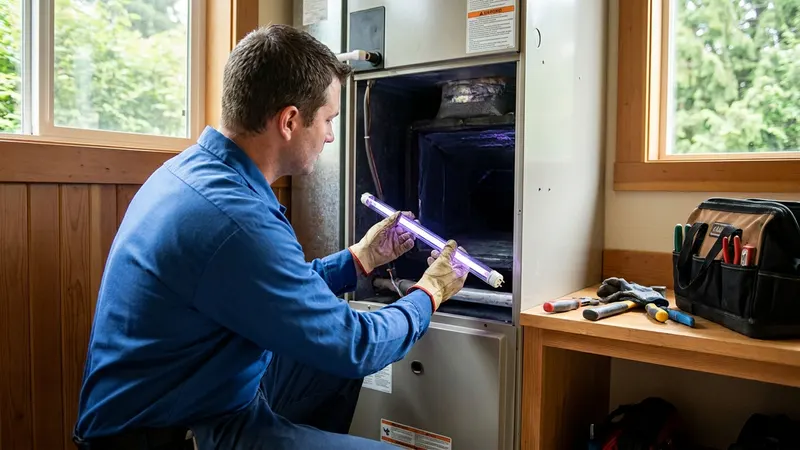
Many homeowners are exploring different options to improve indoor air quality. One increasingly popular choice is installing UV light systems within HVAC units. UV lights can effectively reduce mold, bacteria, and viruses in the air, promoting a healthier environment in your home. While this sounds promising, it’s essential to weigh both the benefits and potential drawbacks.
!
Using UV light in HVAC systems offers clear advantages. These lights help prevent the buildup of mold and mildew, which can improve the overall efficiency of your HVAC system and potentially lower energy costs. However, there are considerations to keep in mind, such as initial costs and ongoing maintenance, which can add up over time.
Understanding the safety and effectiveness of these systems is crucial. While UV lights are powerful, direct exposure can be harmful to humans and pets. Therefore, proper installation is necessary to ensure safety and maximize benefits. Our article will explore these aspects further, arming you with the information you need to decide if UV lights in HVAC systems are the right choice for your home.
Key Takeaways
- UV lights help reduce mold and bacteria in HVAC systems.
- Installation and maintenance require careful planning.
- Direct exposure to UV light can be harmful.
UV Light and HVAC System Fundamentals
Understanding how ultraviolet (UV) light works within heating, ventilation, and air conditioning (HVAC) systems is important for optimizing air quality and efficiency. We’ll explore the nature of UV light, how HVAC systems operate, and how UV light fits into these systems.
What Is UV Light?
UV light is a type of electromagnetic radiation with wavelengths shorter than visible light but longer than X-rays. It is divided into categories: UVA, UVB, and UVC. UVC light is most commonly used in HVAC systems due to its ability to kill or deactivate microorganisms like bacteria, viruses, and mold spores. These properties make UVC light effective for sterilization purposes, ensuring cleaner air.
Basics of HVAC Systems
HVAC systems are designed to provide heating, cooling, and ventilation in buildings. They consist of components such as air conditioning units, furnaces, ductwork, and filters. The efficiency of these systems is dependent on the seamless operation of these components. Regular maintenance and air quality checks are crucial for optimal performance. Properly maintained HVAC systems contribute to energy efficiency and longevity.
The Role of UV Light in HVAC Systems
UV light is incorporated in HVAC systems primarily for air and surface sterilization. UV lamps are strategically placed within HVAC units to target the evaporator coils or air ducts. By doing so, we reduce microbial growth and improve air quality. This type of integration not only enhances air purification but can also improve energy efficiency by keeping HVAC components cleaner, which maintains system performance over time.
Benefits of Using UV Light in HVAC Systems
Using UV light in HVAC systems can provide significant advantages. It can improve the air quality in your home, reduce how often the system needs maintenance, and boost the system’s efficiency.
Improving Indoor Air Quality
UV lights can be a powerful tool for improving indoor air quality. They help eliminate mold and bacteria that often thrive in HVAC systems. By doing so, they prevent these harmful contaminants from circulating through the air we breathe.
Installed in strategic points in the system, UV lights sanitize the air as it passes by. This constant action means that airborne germs and allergens are greatly reduced. This is particularly beneficial for people with allergies or respiratory issues.
Reducing Maintenance Requirements
Another benefit is a reduction in maintenance needs. UV lights help keep the system cleaner by preventing the buildup of organic materials on components like coils.
This means less frequent need for manual cleaning and fewer repairs. When the parts stay clean, the system operates smoothly and doesn’t face unnecessary stress. As a result, this not only saves us time but also cuts down on maintenance costs.
Enhancing System Efficiency
UV lights can significantly enhance the efficiency of HVAC systems. By preventing microbial growth, the lights help maintain clean coils, which are vital for heat transfer in the system. Clean coils make it easier for the HVAC system to operate, reducing energy consumption.
Improved efficiency leads to lower energy bills, making UV lights a cost-effective addition over time. They help the system run at optimal performance, ensuring that we get the most out of our heating and cooling setup.
Health Impact
!
UV light in HVAC systems offers several health benefits by improving indoor air quality. It targets harmful particles, including bacteria and mold spores, which can lead to respiratory issues. By focusing on these aspects, we can better understand how this technology contributes to a healthier living environment.
Mitigating Airborne Contaminants
Ultraviolet (UV) light plays a crucial role in reducing airborne contaminants in HVAC systems. The light is designed to kill bacteria, viruses, and other pathogens that circulate through indoor air. When installed properly, it disinfects the air by effectively targeting microorganisms that can cause illness.
An important aspect of UV light is its ability to neutralize mold and mildew. These are common issues in HVAC systems, contributing to poor air quality. By sterilizing these unwanted elements, UV systems help keep air clean, thus reducing the risk of various health problems. Using UV light can result in fewer allergens and harmful particles in the air, promoting better respiratory health.
Allergens and Respiratory Health
Incorporating UV light into HVAC systems significantly impacts those of us with allergies. By targeting allergens like mold spores, UV light helps manage respiratory problems more efficiently. It minimizes mold and dust mites in the circulation, which are known to trigger allergic reactions.
Respiratory health is often affected by harmful particles present in indoor air. By sterilizing these particles, UV light aids in reducing asthma and allergy symptoms. Air purification provided by UV systems can be a key factor in creating a healthier living environment, free from airborne irritants that compromise our quality of life.
Safety and Effectiveness
!
Using UV-C light in HVAC systems can enhance air quality and control microbial growth. It’s crucial to balance its effectiveness with safety measures. Below, we discuss how UV-C light works for sterilization and potential safety concerns.
Efficacy of UV-C in Sterilization
UV-C is highly effective in killing bacteria and viruses. It disrupts the DNA and RNA of microorganisms, rendering them harmless. In HVAC systems, UV-C lights can be placed in air handlers or ductwork for air sterilization and on coils for coil sterilization. This helps keep the air clean and the system efficient. The placement of these lights is critical to ensure maximum exposure to the electromagnetic radiation, which is key to its microbial killing power.
Both air sterilization and coil sterilization benefit from UV-C light. However, the effectiveness may vary depending on the intensity of the light and the duration of exposure. Regular maintenance helps us maintain optimal performance, ensuring that the UV-C light reaches its maximum potential in reducing airborne and surface bacteria.
Potential Safety Concerns
While UV-C is effective, there are some safety considerations. Prolonged exposure to UV-C light can be harmful to human skin and eyes. It’s important that the lights are installed in a way that prevents direct exposure to people. We should consider using protective coverings and ensuring that the UV-C lights are only operational when necessary.
There’s also the concern of ozone production. Some UV-C lamps can generate ozone, which may worsen indoor air quality. We should select UV-C lights that minimize this risk. By following these guidelines and understanding the potential risks, we can effectively use UV-C light in HVAC systems without compromising safety.