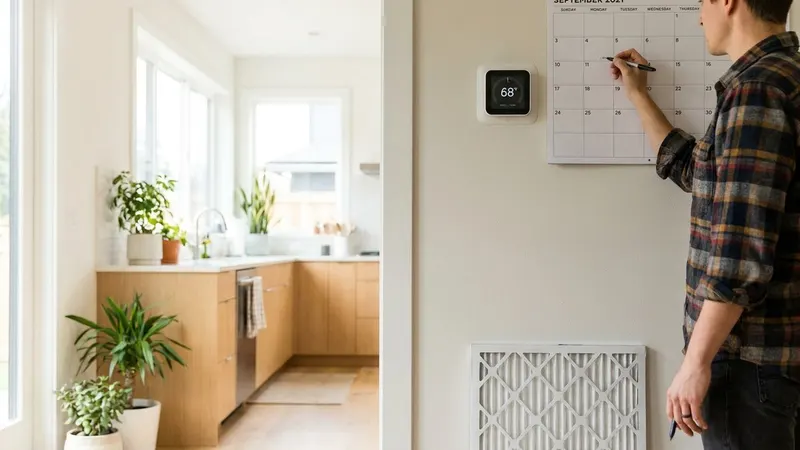
Most HVAC systems should be serviced twice a year, once in spring before cooling season and once in fall before heating season, though once a year is the bare minimum for a lightly used system. Regular tune-ups for your furnace and heating system also help extend equipment life and reduce surprise breakdowns.
That schedule gives a technician time to catch dirty coils, weak electrical components, airflow restrictions, and refrigerant issues before they show up as a no-cooling or no-heat call.
Key Takeaways
- HVAC systems need yearly service to run efficiently and prevent breakdowns
- Regular maintenance improves air quality and saves money on energy bills
- Professional servicing twice a year ensures optimal performance in all seasons
Understanding HVAC Systems
HVAC systems keep your home comfortable year-round. Once you understand the basic setup, it’s easier to see why regular service matters.
Components of HVAC
The heart of any HVAC system is the air handler. It works like the lungs of your home, moving air where it needs to go. Inside, you’ll find:
• Blower motor
• Evaporator coil
• Air filter
Next is the outdoor unit. For AC, that’s the condenser. For heat pumps, it does double duty for both heating and cooling.
Don’t forget the ductwork. Those metal passages carry air to every room, and a good duct system is crucial for efficiency.
Last but not least, there’s the thermostat. It’s the brains of the operation, telling your system when to turn on and off.
Heating and Cooling Basics
Here’s how these systems work. In summer, your AC or heat pump pulls heat from inside and moves it outside.
For cooling, refrigerant cycles through the system. It starts as a cool liquid, picks up heat indoors, then releases it outside as a hot gas.
In winter, furnaces burn fuel to create heat. Heat pumps can reverse their cycle to bring heat in from outside, which makes them well suited to milder climates.
Air conditioners and heat pumps work on the same principle: they move heat rather than create it. That’s why they’re so efficient.
Regular maintenance is key. Systems that are neglected tend to fail early, while a well-kept system can keep you comfortable for years to come.
Importance of Regular HVAC Maintenance
Regular HVAC maintenance matters for both your home comfort and your wallet. It’s not just about keeping things running smoothly — it’s about saving you headaches, money, and stress down the road.
Preventing Unexpected Breakdowns
There’s nothing worse than your AC conking out on the hottest day of summer. Regular HVAC maintenance is your best defense against these surprises.
Inside a neglected unit, dust, debris, and worn parts can quietly add up to trouble. Giving your system a good once-over every year helps catch those small issues before they become big, expensive problems.
Think of it like changing the oil in your car. Skip it, and you’re asking for trouble. Keep up with it, and you’ll run along without a hitch.
Improving Energy Efficiency
A well-maintained HVAC system runs lean. Clean coils and fresh filters don’t just make your air cleaner — they put money back in your pocket.
Routine maintenance keeps your system running at peak efficiency. That means it doesn’t have to work as hard to keep you comfortable. Less work equals less energy used, and that translates directly to lower utility bills.
Systems can go from energy hogs to energy misers with just a little upkeep. A clean filter and proper refrigerant levels can make a real difference.
Extending Equipment Lifespan
Your HVAC system is a big investment, and regular maintenance helps protect it. Well-maintained systems routinely last years longer than neglected ones.
Routine HVAC maintenance does more than fix current issues — it prevents future ones. Lubricating moving parts, tightening electrical connections, and cleaning components all add up to a system that runs smoother and lasts longer.
Consider this: would you rather replace your entire system in 10 years, or keep it running for 15 or even 20? The difference often comes down to regular maintenance.
HVAC Servicing Schedule
A good servicing schedule keeps your system running smoothly and efficiently. Here’s how it breaks down.
Optimal Frequency of Maintenance
Most homeowners are best served by servicing their HVAC system twice a year. Spring and fall are ideal times to get this done.
A good baseline:
- Change air filters every 1-3 months
- Clean outdoor units and remove debris monthly
- Schedule professional tune-ups in spring and fall
Don’t skimp on maintenance. Much like ignoring an oil change for your car, the consequences tend to be expensive.
Seasonal Check-Ups
Timing your HVAC service right can make a big difference. Here’s how it breaks down:
Spring:
- Check and clean AC components
- Test cooling efficiency
- Recharge refrigerant if needed
Fall:
- Inspect heating elements
- Clean furnace or heat pump
- Check for carbon monoxide leaks
It’s also worth watching for seasonal promotions. Many HVAC companies offer discounts during slower periods, so you save money while your system gets the care it needs.
Ready to schedule seasonal HVAC service?
A spring or fall visit is the easiest time to catch wear before peak weather puts the system under more stress.
Call (425) 598-0416
Request a Quote
Proper maintenance is what keeps a system reliable. Here’s a look at what happens during a typical HVAC service visit.
Filter Inspection and Replacement
A service visit usually starts with the air filters. They’re the lungs of your system, and they take a beating. A quick check is simple: hold the filter up to the light, and if you can’t see through it, it’s time to replace it.
Changing filters is a simple task, but it’s crucial. The right size and type for your system matters — beyond keeping the air clean, a clogged filter makes your HVAC work much harder than it should.
Tip: mark your calendar to change filters every 1-3 months. Your system and your energy bill will both benefit.
Checking and Replenishing Refrigerant Levels
Refrigerant is the lifeblood of your AC, so a technician will check its levels. Low levels keep your system from cooling properly.
A reading is taken with gauges. If it’s low, there’s usually a leak somewhere that needs to be located and repaired.
Once that’s sorted, the refrigerant can be topped off if needed. It has to be the right type and amount — too much or too little causes problems of its own.
Ensuring Safe Electrical Connections
Electrical connections matter too. Loose or damaged wiring is a safety hazard, so each connection should be checked, with loose ones tightened and worn ones replaced.
A technician looks for signs of overheating, corrosion, or damage that could lead to bigger problems.
Capacitors and contactors get tested as well. These small parts are essential to your HVAC system, and when they fail, the system can shut down entirely.
Electrical work is no joke. It’s best left to the pros, because DIY electrical repairs can go wrong quickly.
DIY Maintenance Tips
There are a few simple tasks you can do to keep your HVAC running smoothly between service calls. These can save you money and headaches down the road.
Cleaning Air Filters
Air filters are the unsung heroes of your HVAC system. Check them monthly and swap them out every 1-3 months. A clogged filter makes your system work overtime, wasting energy and money.
To clean or replace your filter:
- Turn off your HVAC system
- Locate the filter (usually near the return air duct)
- Remove the old filter
- If it’s washable, give it a good rinse and let it dry completely
- If it’s disposable, replace it with a new one
- Make sure the arrow on the filter points toward the unit
Clean filters can improve your system’s efficiency by up to 15%. That’s a meaningful gain for a simple task.
Thermostat Settings Adjustment
Your thermostat is the brains of the operation, telling your HVAC when to turn on and off.
If you’ve got a programmable thermostat, here’s how to make it work for you:
- Set it 7-10 degrees higher in summer and lower in winter when you’re away or asleep
- Program it to adjust 30 minutes before you wake up or return home
- Use the “auto” setting instead of constantly running the fan
For manual thermostats, adjust the temperature whenever you leave for more than a few hours. Every degree of adjustment can save you about 2% on your energy bill.
Benefits of a Professional HVAC Service
Regular professional HVAC service can save homeowners a lot of headaches and money. A trained technician knows exactly what to look for and how to keep your system running well.
Expert Inspections
An HVAC technician can catch things most homeowners would never spot. They have the tools and know-how to dig deep into your system — checking refrigerant levels, testing electrical connections, and inspecting hard-to-reach parts.
A good technician can find tiny leaks that could turn into big problems, and spot worn belts before they snap. And there’s the safety angle: they’ll make sure there are no gas leaks or fire hazards lurking in your system.
Tailored Maintenance Plans
Every home is different, and so is every HVAC system. That’s the value of a good maintenance plan — it’s built around your equipment rather than one-size-fits-all.
A solid plan keeps your system running at peak efficiency, which means lower energy bills and fewer surprise breakdowns. Maintenance plans can extend the life of an HVAC system by years.
A maintenance plan also sets up a schedule that works for you, with reminders when it’s time for service. And if something does go wrong, you’ll often get priority service.
Financial Considerations
Regular maintenance can save you significant money over the life of your system. Here’s how the dollars and cents add up.
Reducing Utility Bills
Sky-high energy bills are often a sign of an inefficient system. A well-maintained HVAC system runs more efficiently, plain and simple.
Here’s what regular maintenance can do:
- Clean filters can lower energy use by 5-15%
- Proper refrigerant levels can cut costs by 10-20%
- Regular tune-ups can slash bills by up to 30%
The takeaway: don’t wait for your system to break down. Twice-a-year service keeps your system running efficiently and your bills lower.
Costs of HVAC Repair vs. Maintenance
Repair bills can catch you off guard, which is why regular maintenance acts like insurance for your system. Here’s a breakdown of typical costs:
- Average maintenance visit: $75-$200
- Emergency repair call: $200-$1,500+
- New HVAC system: $5,000-$10,000+
Regular maintenance can prevent up to 95% of HVAC emergencies. Much like changing the oil in your car, a little upkeep goes a long way toward avoiding those big, unexpected costs.
Air Quality and Health
Regular HVAC servicing is crucial for maintaining clean air in your home. Neglected systems can take a real toll on health and comfort.
Impact on Indoor Air Quality
A dirty HVAC system becomes a breeding ground for contaminants. When maintenance is skipped, dust, mold, and bacteria build up in your ductwork and filters, then get blown around your house every time the system runs.
In badly neglected homes, you can practically see the particles floating in the air. Poor indoor air quality can lead to a range of health issues, especially for people with respiratory problems.
Regular cleaning and filter changes make a noticeable difference in air quality.
Allergies and Air Filtration
If you’re sneezing and wheezing more than usual, your HVAC system might be a contributing factor to your allergies.
A well-maintained system with high-quality filters can trap:
- Pollen
- Pet dander
- Dust mites
- Other airborne allergens
Better filtration can make a real difference for households with allergy sufferers. It’s remarkable what cleaner air can do for comfort and health.
Don’t skimp on filter changes. It’s a simple task that pays big dividends in comfort and health.
Frequently Asked Questions
Here are some of the most common questions homeowners ask about keeping their HVAC systems running smoothly and efficiently.
HVAC systems should be tuned up twice a year — once in spring for cooling and once in fall for heating. This keeps your system in top shape and helps catch small issues before they become big problems.
Regular maintenance saves money in the long run by improving efficiency and preventing breakdowns. Skipping tune-ups tends to lead to costlier repairs.
What’s the average lifespan of an HVAC system before a replacement should be considered?
A well-maintained HVAC system typically lasts 15-20 years, and some make it to 25 or even 30 years with proper care.
After about 15 years, it’s worth starting to think about replacement. Newer systems are much more efficient, which means lower energy bills.
Can you breakdown the potential costs for annual HVAC maintenance?
Annual maintenance usually runs between $75 to $200 per visit, so you’re looking at $150 to $400 a year for two tune-ups.
That might seem like a lot, but it’s far cheaper than emergency repairs or early replacement. Some companies offer maintenance plans with discounted rates, which can save you money over time.
What regular maintenance tasks are essential to keep an air conditioner running smoothly?
Changing the air filter is the most important thing you can do. Check it monthly and change it as needed.
Clean the outdoor unit, clear debris, and make sure nothing’s blocking airflow. Also keep an eye on your thermostat settings and listen for any unusual noises.
Is it really critical to schedule regular checkups for your HVAC system?
Yes. Regular checkups are like going to the doctor for your HVAC system — they help catch small issues before they become big, expensive problems.
Professional technicians can spot potential failures that homeowners might miss. They’ll also clean and tune your system to keep it running efficiently, which saves you money on energy bills.
How often should you swap out HVAC filters to keep your indoor air clean?
Check your filters monthly and change them at least every 3 months. If you have pets or allergies, you may need to change them more often.
A clean filter helps your system run more efficiently and improves your indoor air quality. It’s an easy task that makes a big difference in your home’s comfort and your system’s performance.